Showing posts with label school. Show all posts
Showing posts with label school. Show all posts
Thursday, 25 April 2013
Introduction
I have decided to reflect my opinions in the form of a blog explaining the foundation phase, montessori's methods, outdoor learning-forest school and learning outside the classroom. I have used a range of different methods to research the information and have used a variety of resources such as the internet, books and journals.

Monday, 22 April 2013
Forest School
 Forest schools are often described as a system of
learning that allows the environment to do the teaching or a place where the
usual class dynamic is altered by the environment. Forest schools are based on
a Scandinavian approach to teaching which highlights the importance of children
having contact with nature from an early age. As the idea of forest school
become more widely known, the idea of learning outside the classroom increased
across Britain rapidly. Schools that
participate with forest school send group of pupils to forest school weekly.
Forest schools are run by qualified forest school leaders who are supported by
teachers and assistants. Teachers are encouraged to train as forest school
leaders so that the approach are a wide ranging and can be linked to the
national curriculum. These can be things such as collecting twigs, making
fires, playing games, etc. By doing all of this the children are using
teamwork. These types of activities allow children to use all of their senses. Forest
school is direct experimental learning rather than theoretical learning and the
children learn by doing for themselves.
Forest schools are often described as a system of
learning that allows the environment to do the teaching or a place where the
usual class dynamic is altered by the environment. Forest schools are based on
a Scandinavian approach to teaching which highlights the importance of children
having contact with nature from an early age. As the idea of forest school
become more widely known, the idea of learning outside the classroom increased
across Britain rapidly. Schools that
participate with forest school send group of pupils to forest school weekly.
Forest schools are run by qualified forest school leaders who are supported by
teachers and assistants. Teachers are encouraged to train as forest school
leaders so that the approach are a wide ranging and can be linked to the
national curriculum. These can be things such as collecting twigs, making
fires, playing games, etc. By doing all of this the children are using
teamwork. These types of activities allow children to use all of their senses. Forest
school is direct experimental learning rather than theoretical learning and the
children learn by doing for themselves.  Forest
school can encourage and inspire individuals of any age through positive
outdoor experiences as well as developing their personal, social, health and
emotional skills. Forest school is also about participating in engaging and
motivation achievable tasks and activities. It also promotes the development of
practical skills which leads on to developing fine and gross motor skills. Forest
schools also give children the opportunity to undertake practical problem
solving opportunities utilising skills taught within the classroom as well as
to enrich and further extent the schools cross curricular topic based approach.
This way of learning helps to greater independence and confidence and develops
pupils awareness of the environment.
Forest
school can encourage and inspire individuals of any age through positive
outdoor experiences as well as developing their personal, social, health and
emotional skills. Forest school is also about participating in engaging and
motivation achievable tasks and activities. It also promotes the development of
practical skills which leads on to developing fine and gross motor skills. Forest
schools also give children the opportunity to undertake practical problem
solving opportunities utilising skills taught within the classroom as well as
to enrich and further extent the schools cross curricular topic based approach.
This way of learning helps to greater independence and confidence and develops
pupils awareness of the environment.
Motivation –
actual enthusiasm to go to forest school as it’s a fun and interesting place to
go.
Behaviour- when
working in a team to explore and play the results will reward in good behaviour
because of the good social interaction whilst enjoying being out of the
classroom
Attendance –
If the children enjoy forest school they are more likely to have a better
attendance as they have something to look forward to each time they go.
Self esteem-
this is raised through achievable kinaesthetic tasks which the children will be
able to complete which will then help their self esteem and confidence grow.
Below is a video showing footage shot over a period of 6 months with children the age of 3 and 4 exploring forest school.
Below is a video showing footage shot over a period of 6 months with children the age of 3 and 4 exploring forest school.
http://www.youtube.com/watch?v=VrDkTm8eqAg
http://www.forestschoolsnpt.org.uk/
http://www.forestschoolsnpt.org.uk/about_forest.html
Forest School Evaluation Project: A study in Wales.
Liz O’Brien & Richard Murray, New Economics Foundation, 2003
Wednesday, 10 April 2013
Learning outside the Classroom
 Learning outside the classroom can be
a good thing for children as it can help to apply their own knowledge across a
range of activities. By learning outside the classroom it can help build
bridges for children between theory and reality. Rather than sitting in a
classroom and listening about it, by taking them out of the classroom they can
experience it for themselves what it is like which will then interest them and
will result in further knowledge. Children learn more by doing things and
enjoying it rather than listening about something and having no interest.
Learning outside the classroom can be
a good thing for children as it can help to apply their own knowledge across a
range of activities. By learning outside the classroom it can help build
bridges for children between theory and reality. Rather than sitting in a
classroom and listening about it, by taking them out of the classroom they can
experience it for themselves what it is like which will then interest them and
will result in further knowledge. Children learn more by doing things and
enjoying it rather than listening about something and having no interest. By experiencing ‘real’ situations, the level of achievement will rise throughout the subjects and therefore will allow children to develop and better their personal and social skills. Learning outside the classroom can take place in a variety of places such as museums, art galleries, beaches, parks. When planned, experiences like these can meet the needs of children very well by a number of ways. They improve academic achievement and allow the children to develop skills and independence in different environments. Learning is more engaged and more relevant and enjoyable. A child’s creativity can also be nurtured and behavioural problems will reduce as the children are probably more likely to learn and listen in an environment that interests them.

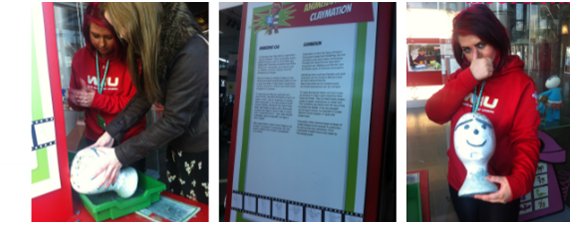
To experience what learning outside the classroom would be like for children, I took a visit to Swansea Waterfront Museum to see what it was like.
When going there i discovered that the
national waterfront museum tells the story of industrialisation and innovation
of Wales over the past 300 years.
Its a good place to visit as its good for welsh
children to learn about how this country become what it is today. It would help
them develop much more in the knowledge and understanding of the world and
their own cultural diversity. Throughout the museum there are quiz machines which are multiple choices which allow the children’s knowledge to grow through the idea of trial and error. There were also a lot of interactional exhibitions which provides the child to learn hands on. This is good for kinaesthetic learners where the writing part explaining what to do and what happens is good for the visual/reading learners. I come across clay in which i made a Claymation. I believed that this was good creative hands on development where children can learn for themselves in an enjoyable way.
Thursday, 4 April 2013
Foundation Phase
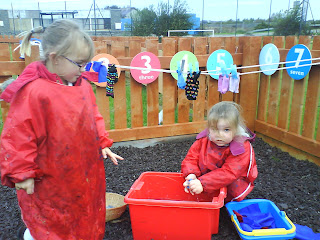 The
Foundation Phase is an approach to learning which is for children between the
ages of 3 and 7 in Wales. It is the compulsory curriculum in Wales for all
children between the ages of 3 and 7 in both maintained and non maintained
provisions that are funded for education by the Local Education Authority. The
foundation phase places a great importance on children learning by doing rather
than sitting in a classroom. The foundation phase also gives young children the
opportunity to gain first hand experiences through play and active involvement
rather than sitting in a classroom completing exercises in books and learning
off the board. By learning through hands on experiences this gives the children
time to develop their listening and speaking skills which will enable them to
become more confident when they are writing and reading. This is to develop the
children’s knowledge, skills and understanding through play, practical
learning, and by solving real life problems in both the indoor and outdoor
environments through these areas of learning.
The
Foundation Phase is an approach to learning which is for children between the
ages of 3 and 7 in Wales. It is the compulsory curriculum in Wales for all
children between the ages of 3 and 7 in both maintained and non maintained
provisions that are funded for education by the Local Education Authority. The
foundation phase places a great importance on children learning by doing rather
than sitting in a classroom. The foundation phase also gives young children the
opportunity to gain first hand experiences through play and active involvement
rather than sitting in a classroom completing exercises in books and learning
off the board. By learning through hands on experiences this gives the children
time to develop their listening and speaking skills which will enable them to
become more confident when they are writing and reading. This is to develop the
children’s knowledge, skills and understanding through play, practical
learning, and by solving real life problems in both the indoor and outdoor
environments through these areas of learning. 
Within the foundation phase there is framework which sets out the curriculum under the seven areas of learning. These seven areas are Personal and Social Wellbeing, And Cultural Diversity, Physical Development, Creative Development, Language, Literacy and Communication Skills, Welsh Language Development, Mathematical Development, Knowledge and Understanding the world.
1)Personal and Social Wellbeing and
Cultural Diversity explores experimental learning in which activities take
place inside and outside of the classroom aiming to find the advantages of
this. This also helps children to understand other peers’ cultures and builds
confidence and which also builds on their self esteem. Whilst doing this it
builds relationships with other individuals who allow them to explore and
understand other people’s feelings.
2)Language, Literacy and
Communication Skills discusses how children in Wales live in a bilingual
society and explores the difficulties that come along with this. Also In this
element of the foundation phase communication is the key when children are
encouraged to talk about their emotions in order to sort out any problems that
they may be having. Children here are encouraged to listen and answer to others
and make choices through a variety of different Medias.
3)Mathematical
Development is helping children develop their skills by oral and practical and
play activities. This is by using a more formal method as the development
increases.

4)Welsh
Language Development is where the children are more and more exposed to the
welsh language. It ensures that welsh language carries on to the next age
groups to come. This can help to encourage feelings of belonging and a sense or
heritage. It can also help to support an understanding of the welsh culture.
5)Knowledge and Understanding of the World is where the child should
experience the world by learning for themselves by investigating indoor and
outdoor environments. All children have curiosity about the world that we live
in so this area of learning helps children explore using their imagination and
through play. The children will be given experiences that increase their
curiosity in which they then begin to understand the world we live in which
enables them to demonstrate care, responsibility, concern and respect.
 6)Physical Development is where the children will exercise their fine gross
motor skills. This explains to the children the importance of keeping fit and
eating healthily. This is also part of the national curriculum.
6)Physical Development is where the children will exercise their fine gross
motor skills. This explains to the children the importance of keeping fit and
eating healthily. This is also part of the national curriculum.7)Creative Development is where the children will practise and explore the designing area of education which includes the subjects arts and dance.
Reference;
http://wales.gov.uk/topics/educationandskills/earlyyearshome/foundation_phase/?lang=en
http://wales.gov.uk/topics/educationandskills/earlyyearshome/foundation_phase/eval/;jsessionid=E83A09DF35FD4C9C0228C93ED131BC51?lang=en
http://wales.gov.uk/topics/educationandskills/earlyyearshome/foundation_phase/foundationphasepractitioners/frameworkchildlearning/?lang=en
Subscribe to:
Posts (Atom)